
SRP: MECHANICAL DAMAGE
This Strategic Research Priority consolidates mechanical damage research to effectively manage deformations identified through condition assessments to ensure repairs are made where truly needed.
outcomes & value to industry
• Improving operator management systems to advance safety, protection of the environment, reliability, and cost-efficiency.
• Eliminating unnecessary excavations and failures.
• Impacting industry recommended practices and standards, including standards for ILI reporting criteria for mechanical damage.

industry improvement
DAMAGE PREVENTION
• Performance assessment for damage prevention and mitigation measures.
• Establishment of key performance indicators for tools, techniques, and approaches.
• New technologies for sensing and responding to unauthorized encroachment on ROW corridors.
INSPECTION TECHNOLOGIES
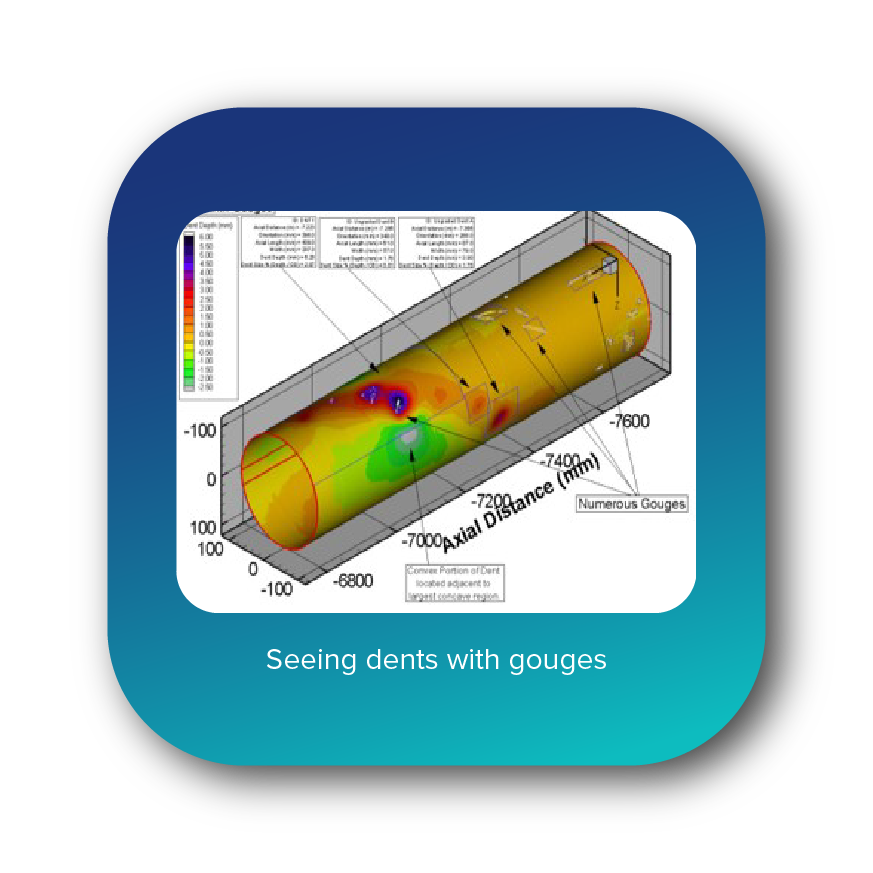
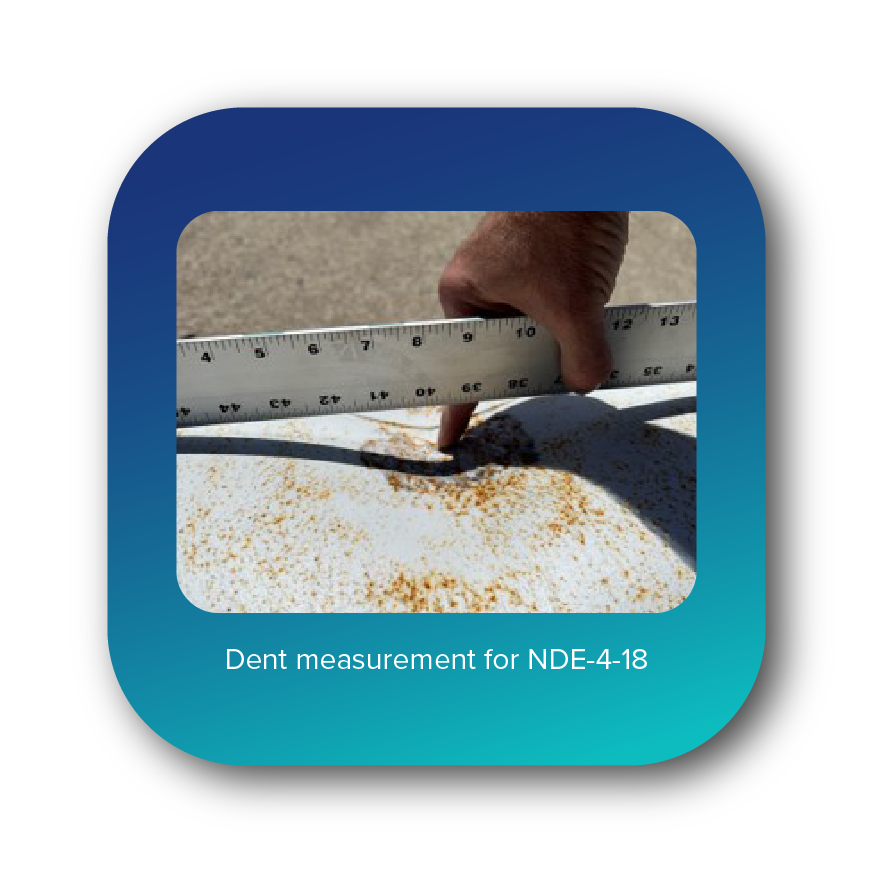
• Detecting, discriminating, and sizing MD using ILI tools and in ditch technologies and methods, including the effects of coincident features.
• Establishing consistent and uniform inspection reporting requirements for deformations on pipelines and for deformations with coincident features.
ASSESSMENT
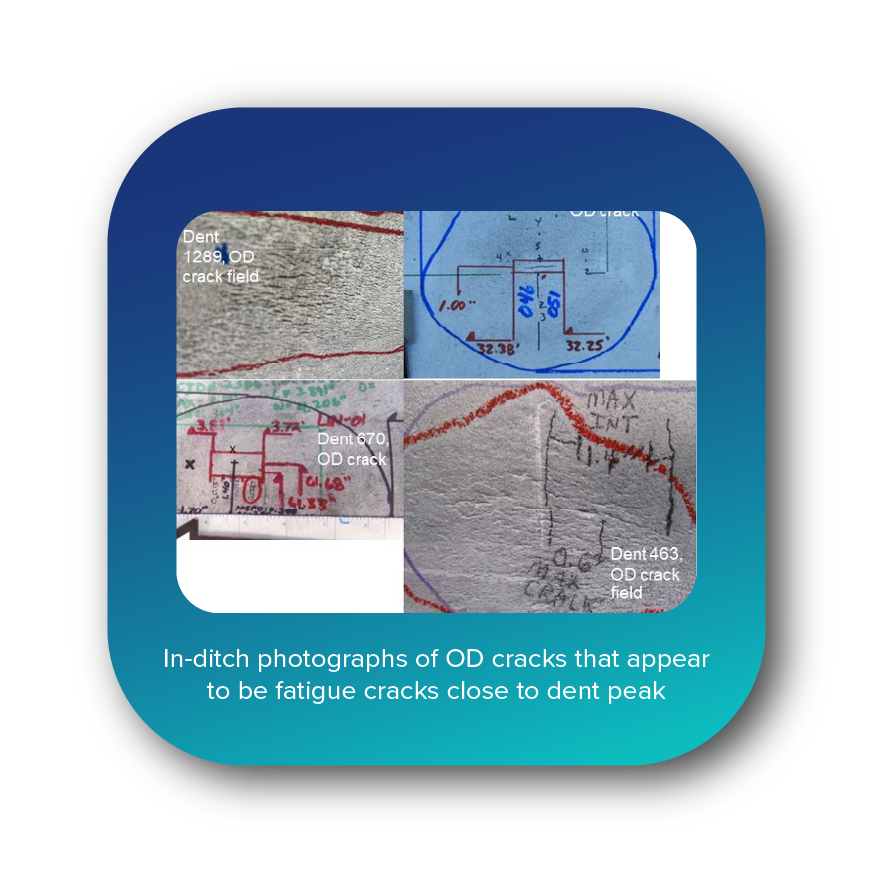
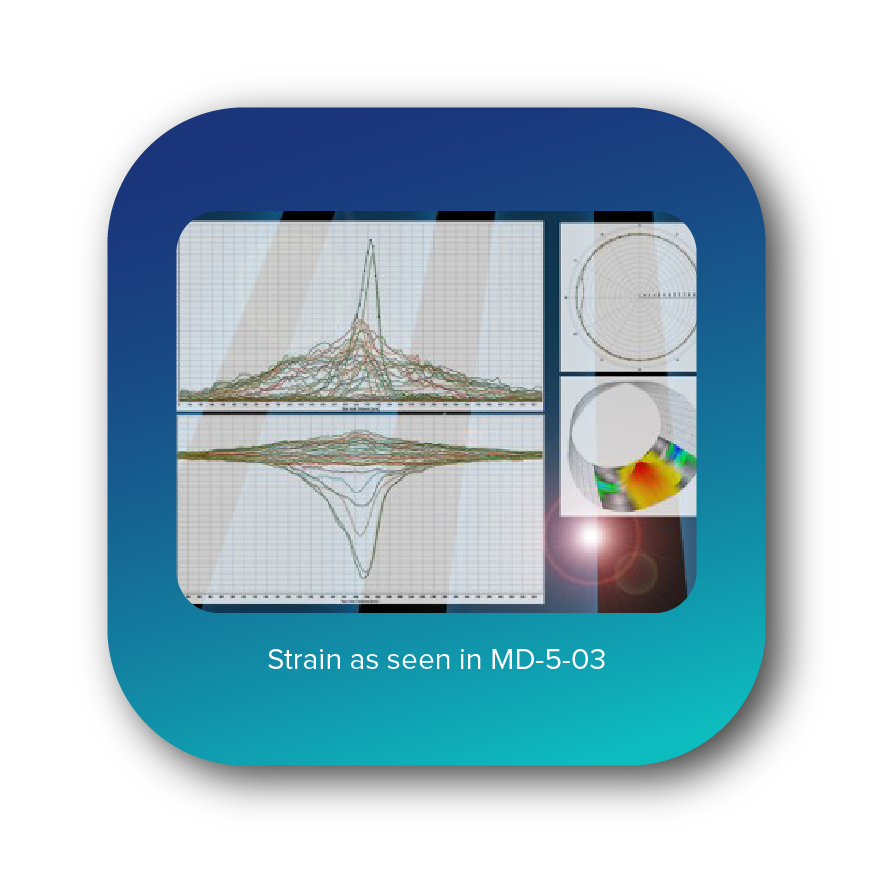
• Improving engineering assessment approaches including indentation strain-induced cracking, risk, failure pressure, pressure-cycling fatigue failure for plain dents and those interacting with other threats/features.
REPAIR
• Connects related PRCI work on composite materials for repair of mechanical damage, and NDE (Non-Destructive Evaluation) studies on the inspection of composites after being installed to address features.
• Provides technically credible justification for updates to PRCI Pipeline Repair Manual regarding mechanical damage.
• Completed ILI test trials at the PRCI TDC (Technology Development Center) including seven ILI technology providers with 70+ mechanical damage samples and multiple ILI systems in both air and liquid coupled environments.
• Led industry-changing feedback sessions with ILI service providers to establish uniform dent shape and coincident features reporting criteria.
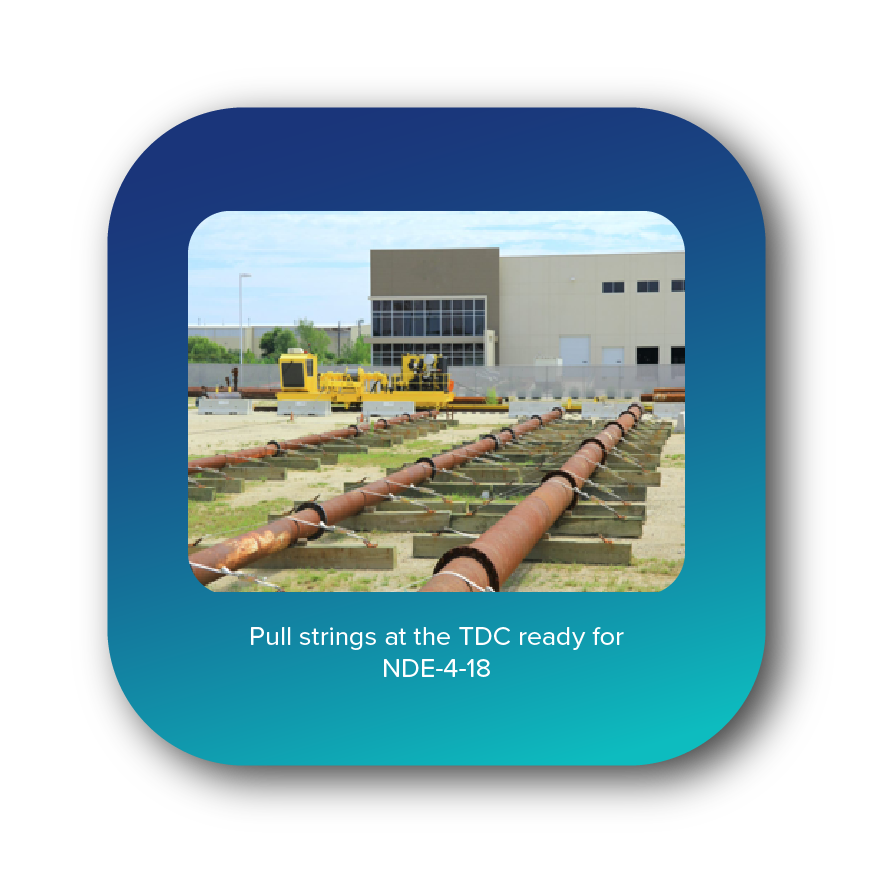
• Expanded the ILI test string at the PRCI TDC with 140+ mechanical damage samples with associated features (metal loss, crack, gouge, weld); testing continuing in 2024 on a minimum of four technology providers participating to improve industry standards on mechanical damage inspection and assessment.
• Reviewed multiple presently applied methods for performing dent/strain/fatigue assessments, evaluating the accuracy of the assessment methods, and making suggestions to improve them.
• Completed 2 reports for screening tools for dents and 1 for ILI performance evaluation for Metal loss, cracks, and gouges in dents.
• Collected pipeline operator data to assess real-world experience and support engineering assessment model validation.
CURRENT RESULTS
Leadership
Munendra Tomar, TC Energy
TIM BURNS, SHELL GLOBAL
“The Mechanical Damage SRP and the various projects carried out as part of it have been instrumental in advancing the industry's state of the art with respect to the management of mechanical damage in pipelines. The work has led to the development of the first-ever industry consensus recommended practice for dent management in the form of API 1183, providing operators with a solid foundation to develop their dent management programs.
Nevertheless, there remains room for improvement in API 1183. Some researchers have raised certain questions regarding aspects like the applicability of the methods, inherent variability in the assessment results, and reservations about the modeling methods employed. While some of these issues may have been addressed by studies completed after the publication of API 1183, PRCI plans to conduct follow-up work as part of MD SRP Phase II. This is aimed at enhancing the body of knowledge and refining the guidance derived from the work. Correspondingly, API has also initiated the development of the second edition of API RP 1183.”
Munendra Tomar